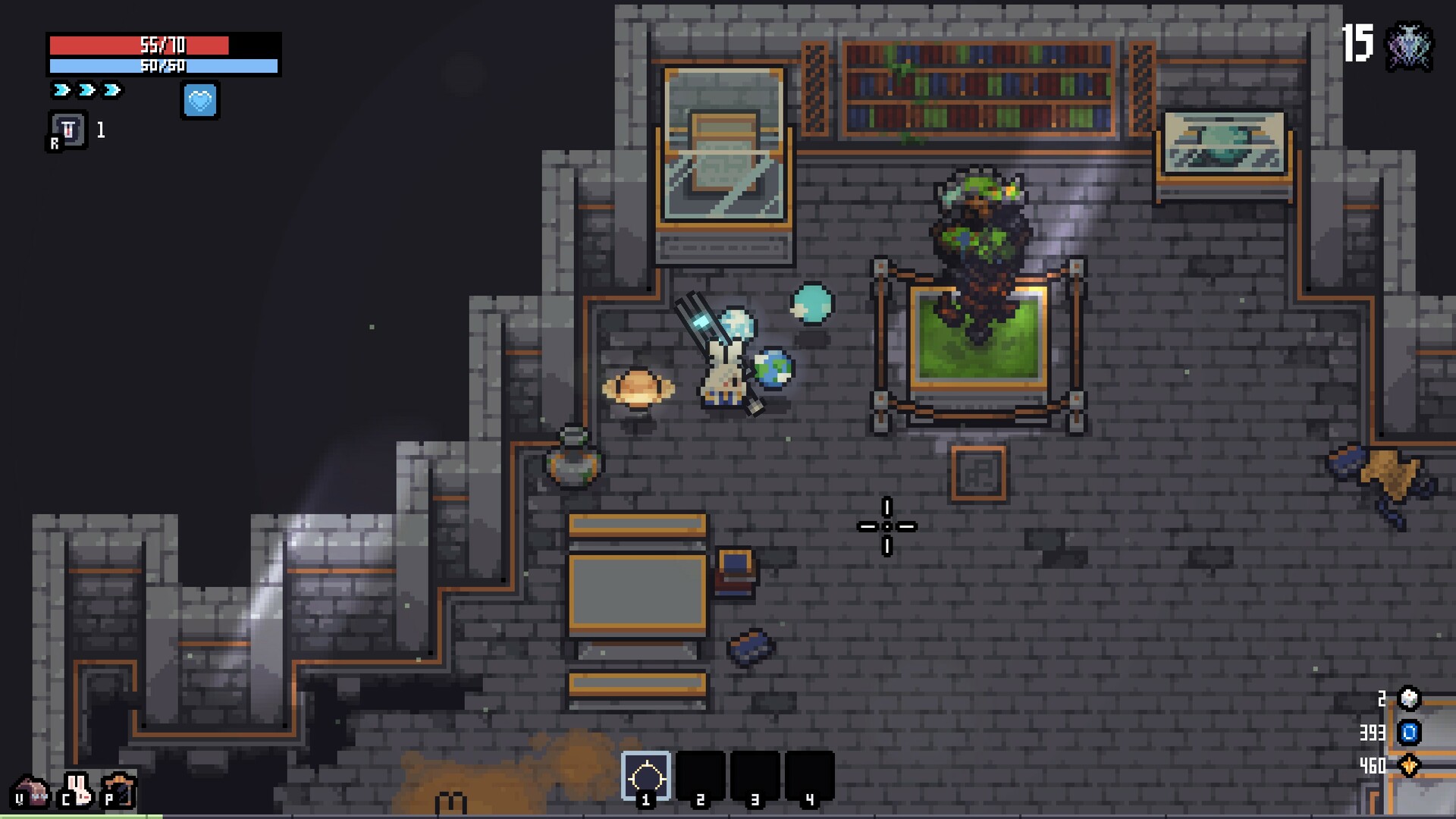
Official Sephiria tablet arrangement screenshot from Steam.
Official Steam media · TEAM HORAYThe adjacency rule that makes Tablets matter
Official feature language states that Tablets enhance adjacent Artifacts. That is the entire design reason this page exists as more than a second item list. If Tablets only added isolated stats, they could live inside a generic loot dump. Because they care about neighbors, Sephiria turns inventory into a spatial build system.
Adjacency implies direction and contact. When you place a Tablet, inspect which Artifact cells it actually touches after rotation or movement. A Tablet that looks central but touches filler Artifacts is weaker than a Tablet parked against your two highest-impact effects.
About seventy Tablets at launch is enough variety to reward planning without requiring a three-hundred-row Artifact-style catalog before the page is useful. Learn the rule first; fill names second.
Adjacency is the reason Tablets are not just smaller Artifacts. Official copy ties them to neighboring Artifact cells, so orientation and contact are part of the build. About seventy launch Tablets is enough variety to reward planning while still learning from a compact index shell.
Placement habits that survive new drops
Leave flex space. Boards that are perfectly packed on minute ten become uneditable on minute thirty. Keep a free cell near your core Artifact cluster so a new Tablet can enter without a full rebuild under timer pressure.
Rebuild on calm screens. After elite or boss-like spikes—whatever form they take in your chapter band—open the inventory and fix broken adjacency before the next fight. Co-op groups should nominate a pause caller so four players are not rearranging blindly mid-combat.
Prefer explainable shapes. A single straight amplifier line or a tight 2×2 core is easier to maintain than decorative scatter. If you cannot explain the shape, you will not repair it when tired.
Flex cells save runs. Perfect packing looks clever until a new Tablet drops and you have nowhere to rotate. Keep a spare cell near the core cluster and rebuild on calm screens after spikes. Co-op groups should nominate who calls inventory pauses so rearranging is deliberate.
Working with the Artifacts index
Artifacts answer “which effect?” Tablets answer “which neighbor gets amplified?” Read them as a pair. When an Artifact effect is situational, Tablet investment may be wasted; when an Artifact effect is always on, adjacency becomes high value.
This wiki keeps the two routes separate so search intent stays clean. Players looking up Tablet placement should not be forced through a three-hundred-scale Artifact essay, and players hunting effect text should not drown in placement theory.
As verified Tablet entries arrive, expect fields for name, enhancement summary, and notes about orientation. Unverified complete catalogs will not be stubbed with filler rows.
Read Artifacts for effect selection and Tablets for amplifier geometry. Splitting routes keeps search intent clean: placement questions should not drown in three-hundred-scale effect essays. As verified Tablet names arrive, store orientation notes beside enhancement summaries. Search intent stays cleaner when effect hunters and placement hunters land on different routes instead of one overloaded item dump.
Launch scale, potions, and related systems
Tablets sit beside other 1.0 systems: Artifacts (~300), potions (30+), costumes (20+), and weapon upgrades (200+). Potions are not Tablets; do not spend adjacency attention on consumable timing lessons that belong elsewhere. Costumes are not board pieces.
If a patch reshapes inventory rules, this page will defer to patch notes for the chronology and then update placement guidance. Until then, the adjacency sentence from first-party copy remains the governing rule.
Official screenshots on this route emphasize the arrangement UI so readers can map vocabulary—cells, neighbors, panels—onto the real game chrome.
Potions and costumes sit in the same 1.0 package but do not share Tablet rules. Do not spend adjacency attention on consumable timing lessons that belong elsewhere. When patches touch inventory, update this page after the patch chronology, not before. If a future post redefines inventory rules, update this page only after the patch chronology records the change date and label.
Co-op and shared decision quality
In online co-op for up to four players, inventory literacy becomes social. Call out when you are about to break a neighbor relationship. If the game state allows shared planning, compare boards between rooms instead of only after wipes.
Do not assume a partner’s Tablet placement is wrong because it differs from yours. Ask which Artifact they are amplifying. Shared vocabulary from this page—“adjacent,” “core cluster,” “flex cell”—reduces conflict.
Hard Mode elements can punish sloppy boards faster. That is another reason to master adjacency on standard runs first.
Shared vocabulary reduces co-op friction: adjacent, core cluster, flex cell, orphaned Artifact. Ask partners which effect they are amplifying before you “fix” their board. Hard Mode can punish sloppy geometry faster, another reason to master adjacency on standard runs first. A thirty-second adjacency call between rooms often saves a full wipe later when Hard Mode elements are active.
Players consulting the co op boards notes should re-open Steam news if a fresh hotfix landed after this page’s verification date of 2026-08-01.
Suggested reading order with the rest of the manual
The tablets route is one task surface inside the larger Sephiria field manual. Start from the homepage launch dossier when you need the 1.0 scale in one glance, then return here when the run question is specifically about this system. If combat inputs still fail, jump to the beginner guide before optimizing database choices.
Use the walkthrough only for chapter pacing. Use patch notes when version drift might explain a sudden change in feel. Use characters only for Bunnyville category orientation. Keeping those doors separate prevents one overloaded page from answering every intent poorly.
When multilingual pages go live, system vocabulary such as Artifact and Tablet should follow termMap locks and local official terms rather than free paraphrases. English remains the source of structured fields; translations reinject SEO from keywordMap rather than inventing new claims.
If you are contributing evidence later, attach first-party URLs or retained game captures to each new row. Unsourced spreadsheets are research leads, not publishable catalog facts. This page’s job is to stay useful while incomplete rather than to fake completeness.
If your effects are strong but the run still feels weak, repair Tablet contact before abandoning a weapon branch. If combat inputs fail, leave this page and relearn block timing. The right manual door depends on the real failure mode.
Frequently asked questions
How many Tablets launch with Sephiria 1.0?
Launch materials describe about 70 Tablets. This index uses that scale while individual entries are verified. Launch materials describe about seventy Tablets, enough to reward placement skill while this index remains an honest shell awaiting verified individual rows. Use that scale to set expectations for variety while individual rows are still being verified against first-party evidence.
What do Tablets do?
They enhance adjacent Artifacts. Placement and orientation change outcomes even when your Artifact list stays the same. Tablets enhance adjacent Artifacts, so orientation and neighbor choice are part of build craft rather than pure collection score. Orientation and neighbor choice therefore belong in your run notes alongside which Artifacts you are protecting.
Should I read Tablets or Artifacts first?
If you do not understand effects, start with Artifacts. If your effects are fine but power feels low, start here and repair adjacency. Start with Artifacts when effect literacy is missing, and start here when effects look fine but realized power still lags because adjacency is broken.
Will every Tablet get its own page?
Only when names and rules are evidenced. Empty honest indexes beat fabricated full dumps. Individual Tablet pages appear only when names and rules are evidenced; empty honest indexes beat fabricated full dumps every time. Until then, learn the adjacency rule and keep flex cells rather than waiting for a complete name list.